Machine Learning
ChurnPulse — Telecom Customer Churn Intelligence
Customer churn prediction in the telecom industry is the process of identifying subscribers who are likely to discontinue their services before they actually leave. For telecom providers, predicting churn early is valuable because retaining an existing customer is often more efficient than acquiring a new one. An ML-based churn system can analyze customer behavior and account patterns to identify rising churn risk and give the business an opportunity to intervene with targeted retention strategies.
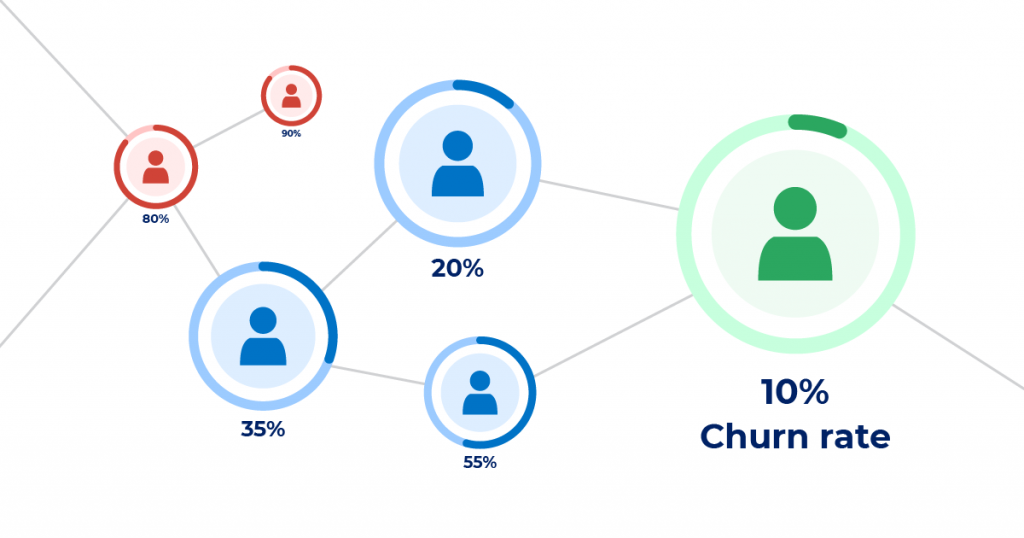
The platform provides an automated churn-risk prediction system that continuously evaluates customer information and produces a risk signal for individual subscribers. Instead of relying on manual analysis, the system turns customer data into actionable predictions, allowing retention teams to prioritize customers who are most likely to leave.
The application uses FastAPI for the backend prediction service, Streamlit for the user-facing interface, and PostgreSQL for customer, prediction, and application data. Scikit-learn powers the ML pipeline, with the model lifecycle covering baseline development, evaluation, threshold analysis, hyperparameter optimization, and model selection. The prediction workflow is automated so that customer information can flow through the system without requiring manual execution of individual ML steps.
The system is designed as an end-to-end production application with CI/CD-based deployment, automated model inference, and an API architecture focused on low-latency prediction and reliable throughput. The application separates the presentation, API, data, and ML layers, making the system easier to maintain and allowing the prediction service to handle multiple customer-risk requests as part of an operational workflow.
The final system functions as an early-warning mechanism for customer retention. Customer behavioral signals are evaluated automatically, and subscribers whose behavior indicates elevated churn probability are flagged for potential intervention. This moves churn prediction beyond a static ML model and turns it into an operational system that can continuously identify at-risk customers and support proactive retention decisions.